AI phone agents that answer and place real phone calls
Give your Assistant Cortex agents a real phone number. The Phone Numbers application connects the public telephone network to your AI agents, so they answer inbound calls, place outbound calls, hold a natural spoken conversation, hand the caller to a human when it matters, and leave behind a recording, a transcript and a complete reasoning trace of everything that happened.
No call-centre rebuild, no separate voice vendor, no code. Buy a number inside the app, point it at an agent, and the next person who dials it is talking to your AI.
From phone number to live AI agent in three steps
1. Get a number
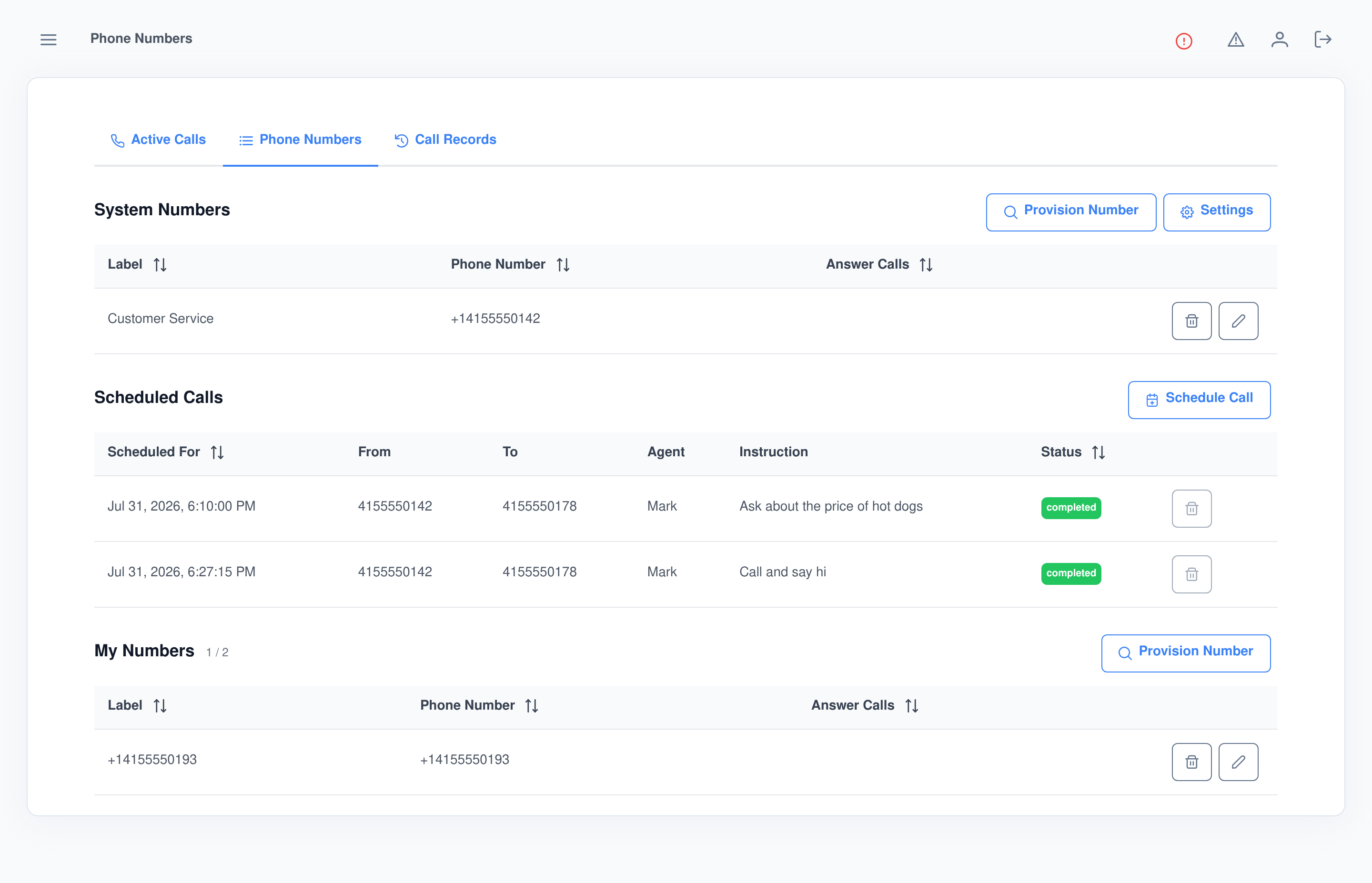
Search live carrier inventory by number type, area code, state or city, compare setup and monthly cost, and provision the number without leaving Assistant Cortex.
2. Assign an agent
Choose which AI agents answer that number, set the greeting, the call time limit and the hang-up timeout, and restrict who is allowed to reach it.
3. Take the call
The agent picks up, listens, speaks in its own voice, uses its tools mid-call, and writes the whole conversation back to your call records.
An AI answering service that actually holds a conversation
Inbound calls are handled as real-time conversations, not as a phone tree. Speech is transcribed as the caller talks, the agent reasons over it with the same tools and knowledge it uses in chat, and the reply is spoken back in that agent’s own voice.
Built for real phone calls
- Interruptible. Talk over the agent and it stops to listen, the way a person would.
- Answering-machine aware. Outbound calls can detect a machine and leave a voicemail instead of talking to a beep.
- No dead air. Hold audio covers the moment while the model is thinking.
- Per-number greeting. Each number opens with its own message and its own agent.
- Tools mid-call. The agent can look things up, write records and trigger other abilities while the caller is still on the line.
Hand over to a human whenever you need
- Transfer to a person. The destination rings first and is only bridged once it answers, so the caller is never dropped into silence.
- The agent stands down. Once a human is on the line the AI stops talking and the two people speak directly.
- Hand back to an agent. Return the caller to an AI agent when the human is done.
- Conference. Bridge extra participants into a live call, or remove them again.
- Full manual control. Play audio, send DTMF tones, start a recording or hang up a specific channel at any moment.
Outbound calls your agents place for you
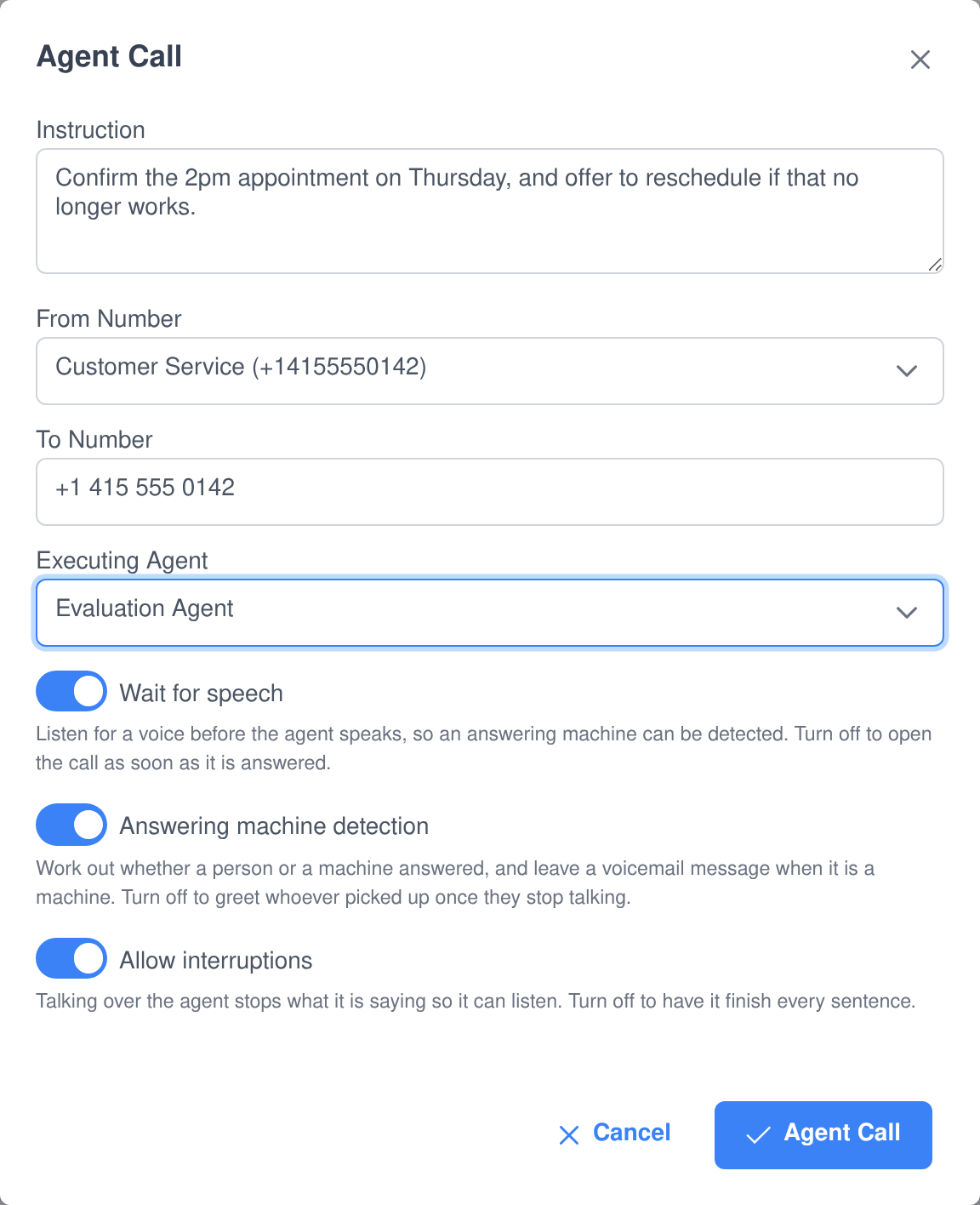
Describe the call in a sentence and Assistant Cortex turns it into an opening line, dials out from one of your numbers and runs the conversation. When the call ends you get the turn-by-turn result back, so an agent can call someone on your behalf and then report what was said.
- Agent calls. Pick the number to call from, the destination, the agent, and whether to wait for speech, detect answering machines and allow interruptions.
- Direct calls. Connect two people to each other with no agent in the middle, and still get a transcript afterwards.
- Scheduled calls. Queue a call for a future date and time with the instruction attached, and let it place itself.
- Calls from chat. Ask an agent in the chat window to phone someone, and it picks the number, places the call and comes back with the answer.
Every call recorded, transcribed and explained
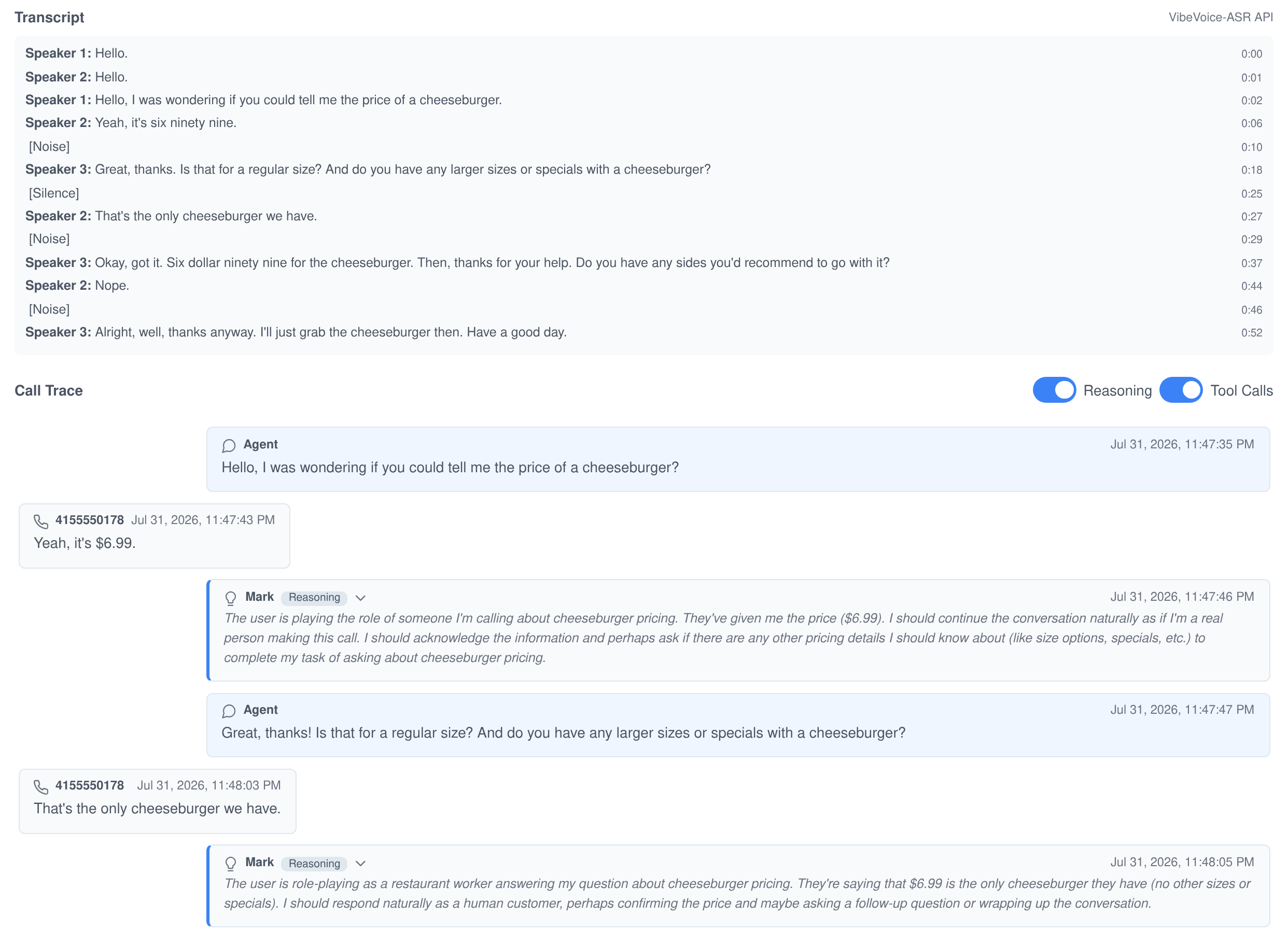
Assistant Cortex does not just log that a call happened. Each record carries the audio, a speaker-separated transcript with timings, and a full trace of what the agent was thinking and which tools it called at each step, so you can see exactly why it said what it said.
Recording and playback
Both sides of the call are recorded and stored against the record, playable in the browser or downloadable through a signed link.
Transcription with speakers
Finished calls are transcribed with speaker labels and timestamps, and the transcription model used is recorded alongside the text.
Reasoning you can audit
Toggle reasoning blocks and tool calls on or off in the trace to follow, or to hide, the agent’s internal steps.
Call analytics without a separate reporting tool
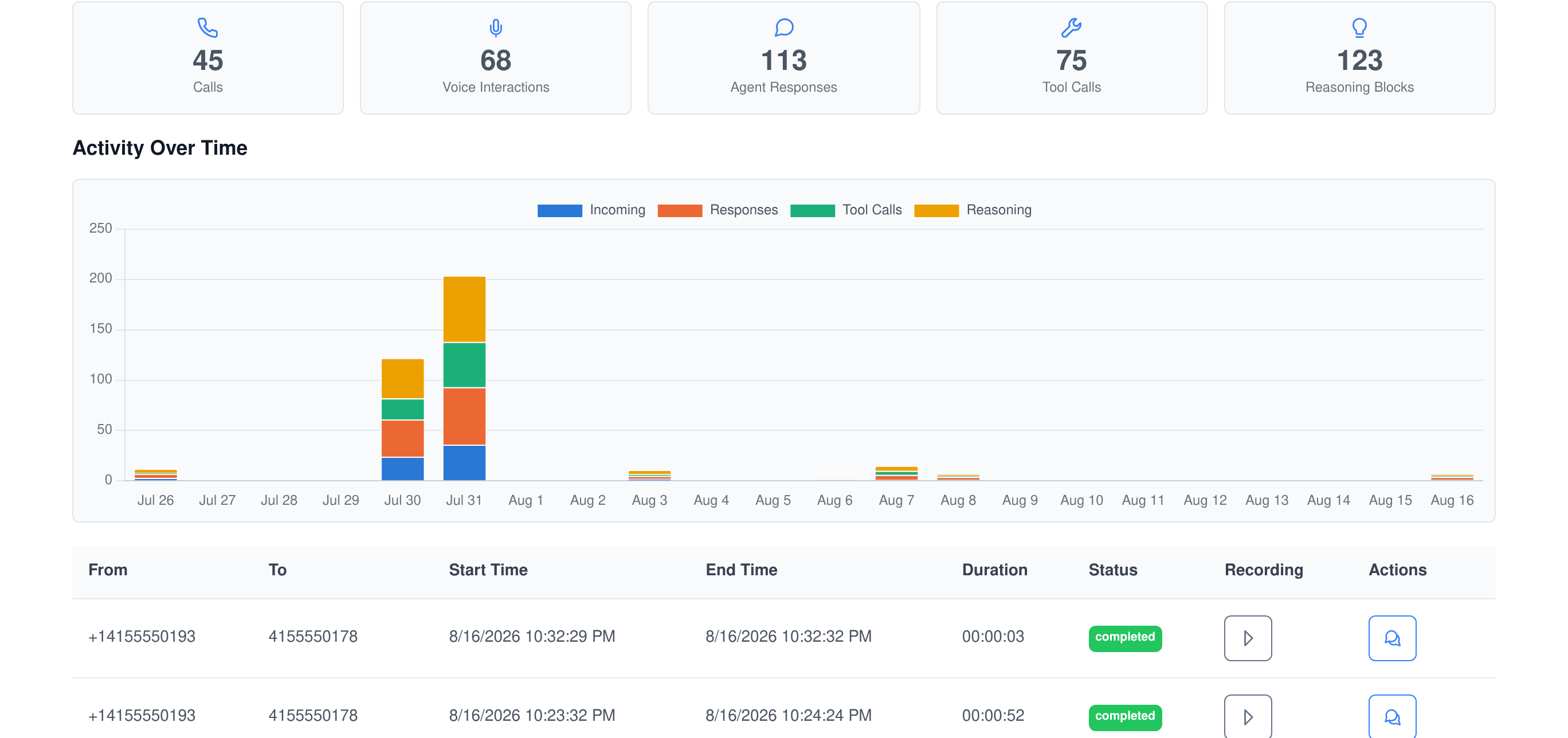
The call records screen counts calls, voice interactions, agent responses, tool calls and reasoning blocks, charts activity over time and per number, filters by number or date range, and exports the result for the rest of your reporting.
Buy the number, keep the control
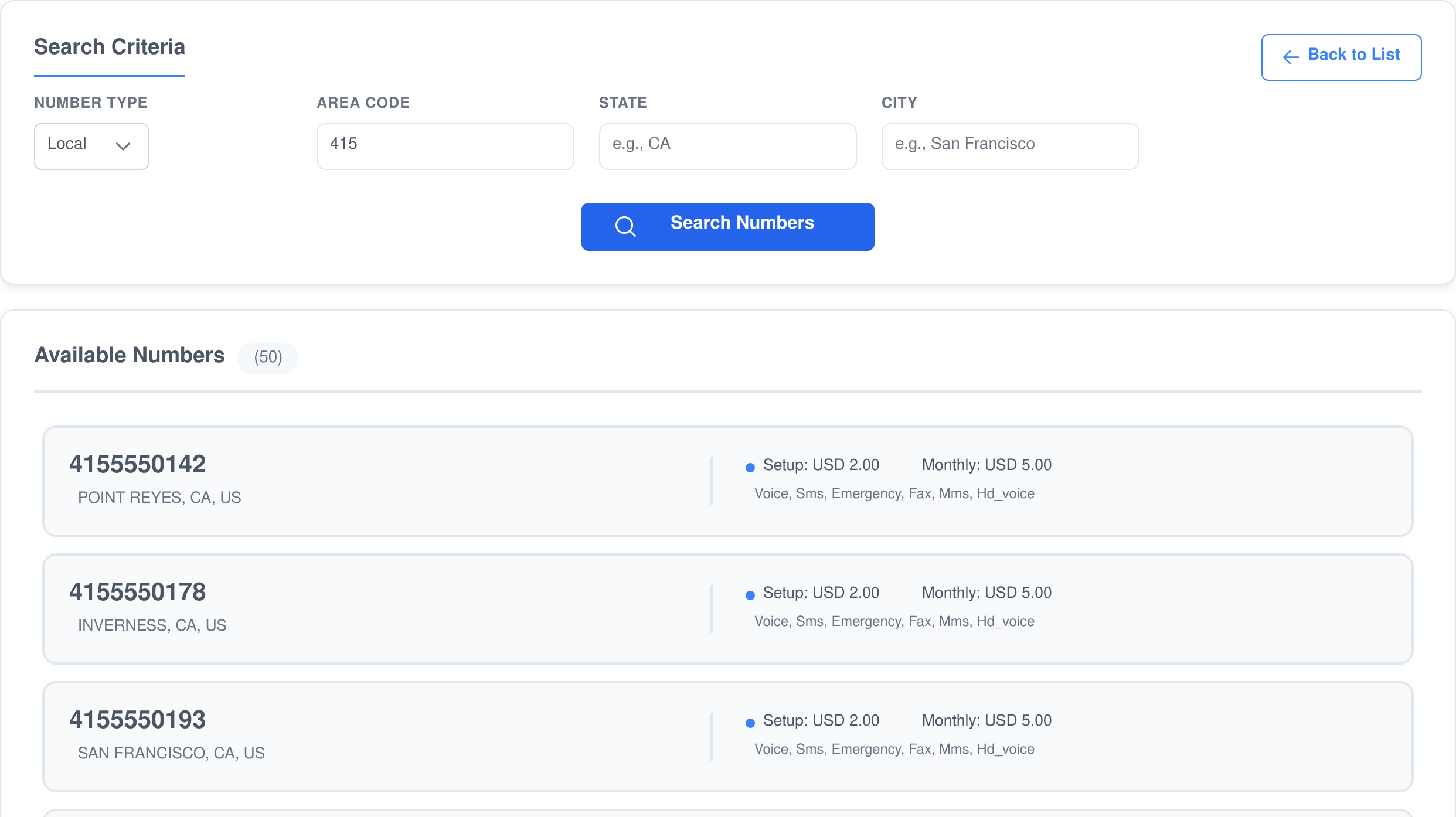
- Search real inventory by number type, area code, state and city.
- See the cost first, with setup and monthly price and the voice, SMS, MMS, fax and emergency capabilities of each number.
- Shared or personal. Run system numbers for the whole organisation, and let individual users provision their own within an allowance you set.
- Your carrier, your account. Numbers are provisioned through your own carrier account and stay yours.
Text messages go to the same agents
A number that supports messaging becomes a two-way SMS and MMS channel. Incoming texts are handed to your AI agents as a conversation, picture messages are pulled in as attachments the agent can look at, and replies go back out through your carrier. Voice and text on one number, answered by the same agent.
Every phone action is an AI ability — and an MCP tool
The Call Control ability puts the phone line under an agent’s own control, so it can dial, speak, conference and hang up as part of solving a task. The same functions are published by the Assistant Cortex MCP server, which means Claude, an IDE or any other MCP client can drive your phone numbers with exactly the capabilities — and exactly the permissions — your agents have.
call_control_list_phone_numbers
List Phone Numbers
Lists the numbers this caller is allowed to dial out from — the shared system numbers plus any number they own personally — and returns the id to call from.
call_control_place_outgoing_call
Place Outgoing Call
Dials a destination from one of those numbers with an instruction such as “ask what time they close”, waits for the call to finish, and returns the conversation as a turn-by-turn array of what each side said.
call_control_add_caller_to_call
Add Caller to Call
Bridges another party into a call that is already running, turning a one-to-one conversation into a conference without dropping anyone.
call_control_playback_sound
Play Sound
Plays audio down the line — a URL, a workspace file, or raw audio data. Called with nothing at all it plays the last audio file produced in the conversation, so an agent can generate something and then play it to the caller.
call_control_hangup_call
Hangup Call
Ends the call, speaking a closing line first so the caller gets a goodbye rather than a sudden click.
Enterprise controls from the first call
Permissions that match your org
- Separate rights to view numbers, manage numbers, manage only your own numbers, place calls, view the live dashboard, view scheduled calls and view or export call records.
- People who own a personal number see only the calls and records on that number.
- Numbers can be restricted to particular agents and particular user groups.
Runs on your terms
- Built on Asterisk and standard SIP trunking, so it works with the carrier you already use.
- Multi-tenant by design: each instance gets its own telephony credentials and its own numbers.
- Self-hosted or hosted, with speech, transcription and language models of your choosing, including fully private ones.
What people use AI phone agents for
- After-hours answering so nobody reaches a voicemail box.
- Appointment confirmations and reminders placed automatically at a scheduled time.
- Inbound qualification that gathers the details and hands the good calls to a person.
- Outbound research calls where the agent asks a question and reports the answer back in chat.
- Recruiting and interview screening over the phone with a full transcript afterwards.
- Support triage with recordings and traces for quality review.
Frequently asked questions
Do I need a separate voice platform?
No. Telephony is part of Assistant Cortex. It runs on Asterisk with standard SIP trunking, so you connect the carrier you already use, provision numbers inside the app and point them at your agents.
Can the AI hand the caller to a real person?
Yes. You can transfer a live call to any phone number. The destination rings first and the caller is bridged only once it is answered, at which point the agent stops speaking and the two people talk directly. You can hand the caller back to an agent afterwards.
Can callers interrupt the agent?
Yes. Talking over the agent stops what it is saying so it can listen, and interruption can be turned off per call if you would rather it finished every sentence.
Are calls recorded and transcribed?
Both sides of a call can be recorded, played back in the browser and downloaded. Completed calls are transcribed with speaker labels and timestamps, and stored alongside a trace of the agent’s reasoning and tool use.
Can agents make outbound calls on their own?
Yes. An agent can list the numbers it is allowed to call from, place a call with an instruction such as confirming an appointment, and return the conversation turn by turn. Calls can also be scheduled ahead of time.
Does it handle text messages too?
Yes. Numbers that support messaging carry two-way SMS and MMS into the same agents, including picture messages, with replies sent back through your carrier.
Can each user have their own number?
Yes. Alongside shared system numbers, users can provision personal numbers within an allowance you set, and they only see the calls and records belonging to their own numbers.
Put your agents on the phone
The Phone Numbers application ships with Assistant Cortex. Start a trial, provision a number and let an agent take the next call.